
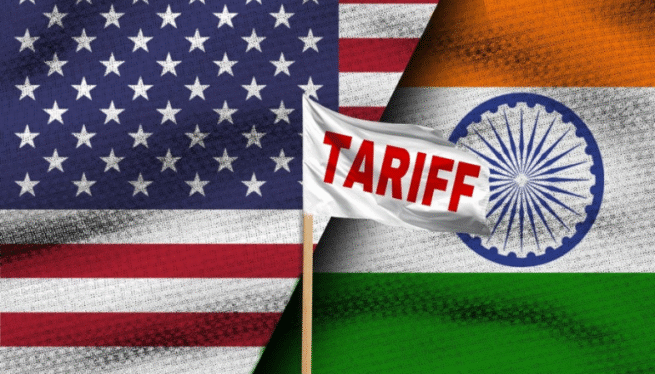
The India-United States economic relationship has often been described as one of considerable promise, constrained by structural hesitation. For decades, the two democracies traded enthusiastically without ever creating a comprehensive framework to anchor that commerce. Now, with negotiations around an India-US Free Trade Agreement (“FTA”) gaining renewed intensity, coupled with the unconventional and transactional approach adopted by the Trump administration, the conversation has shifted from whether such a pact is possible to how transformative it could be.
Recent dialogue
At the heart of the recent excitement and brouhaha, is the announcement by President Trump and subsequently by Prime Minister Modi about the reduction of tariff imposed by the US on Indian exports from 25% (50% including the additional tariff imposed by the US because of the oil bought from Russia) to 18%. While the US has described this as a gesture of friendship and respect for India’s economic aspirations, India’s reaction has been reticent. It is essential to note that the original punitive tariff regime had multiple components tied to India’s energy sourcing, particularly purchase of discounted Russian oil under prevailing market conditions.
A long courtship in global trade
With India opening its economy in the early 1990s, the US has been a critical commercial partner. While bilateral trade has grown by leaps and bounds, entering into a comprehensive trade arrangement has been difficult because of reservations on both sides.
The US has been pressuring India to further liberalise its economy, strengthen intellectual property protections, and allow greater market access for agricultural products such as soyabean, pulses, and dairy. India, however, has been resisting the pressure, citing domestic sensitivities. The 2019 withdrawal of India’s preferential access under the USA Generalized System of Preferences symbolised the fragility of the existing arrangement. Trade continued to expand, but without the predictability of a rules-based framework.
This background demonstrates the significance and urgency of the current negotiations for both nations. Both sides now display willingness to invest political capital in designing a durable economic partnership, especially after India’s recent signing of several important FTAs, notably with the EU and the UK. Similarly, for India, the US is the most important market for its goods.
What a modern FTA would contain
A contemporary trade agreement between India and the US would look very different from the tariff-cutting deals of the late 20th century. While customs duties on goods — including textiles, engineering products, agricultural commodities, and manufactured equipment — would remain central, the heart of the agreement would lie in the regulatory alignment.
Digital trade is likely to be a defining pillar. Rules governing cross-border data flows, platform regulation, and taxation will shape how two innovation-driven economies will interact. Services mobility, particularly for technology professionals, is one of the most commercially significant issues for India, whose global competitiveness depends substantially on human capital.
Supply chain cooperation is another emerging dimension. Spanning semiconductors, defence manufacturing, renewable energy components, and critical minerals, the agreement could create preferential corridors for sectors that are now regarded as strategic rather than mere commercial categories. Investment protection mechanisms would aim to provide long-term certainty for capital-intensive industries.
But the most revealing aspects of the agreement will be the concessions granted to the other side. Agriculture — specifically, wheat, maize and soyabean — along with dairy and dairy products have remained political anathema to India. Conversely, the US has resisted India’s efforts to ensure its big tech companies comply with Indian digital regulations and taxation. Data sovereignty and digital regulation reflect deeper philosophical divergence that may not get resolved through tariff calculations. Modern FTAs also incorporate environmental and labour provisions, and India’s positioning on these aspects will shape its global trade identity.
The promise for India
The economic dividends could be substantial for India. Labour-intensive sectors, including textiles, leather, and food processing, may gain significantly from improved access to the world’s largest consumer market. Advanced manufacturing and high-technology industries would benefit from increased investment flows and technology partnerships. The services sector, already a pillar of India’s global presence, could expand further under more predictable mobility and regulatory arrangements.
Consumers would likely see indirect gains through greater product variety and competitive pricing. A comprehensive, high-standard agreement with the US, providing requisite concession for several high-tech equipment, vehicles and motorcycles would signal India’s commitment to stable, rules-based commerce, strengthening investor confidence well beyond the bilateral corridor.
A defining economic moment
The India-US FTA represents more than a technical trade exercise. It marks a significant stage in the evolution of a partnership that has outgrown informal arrangements. Two large democracies attempting to convert political alignment into durable economic structure also sends a positive signal to the rest of the world.
For observers, the negotiations offer a glimpse into how 21st-century trade is being rewritten: less about tariffs alone and more about technology, resilience, and strategic trust.
The agreement is still being composed, its final provisions undetermined. Yet, even in the draft form, it carries the unmistakable energy of a formidable relationship being forged between the two largest and biggest democracies that is expected to create a formidable economic relationship that will be beneficial for the rest of the world.