Listen to this post
FIG Paper No. 54 (VDA Series 9): Recent Delhi High Court Rulings: Learnings for Digital Asset Players



This FIG paper examines in detail the recent Delhi High Court rulings, which have clarified the scope of judicial remedies available for cryptocurrency exchange users in India and distils important lessons for virtual digital asset (“VDA”) industry players.

Continue Reading FIG Paper No. 54 (VDA Series 9): Recent Delhi High Court Rulings: Learnings for Digital Asset Players

From Restriction to Recalibration – The Path Forward for Press Note 3 and Cross-Border M&A

Background

Earlier this week, as a part of a broader set of key decisions, the Union Cabinet announced modification to India’s foreign investment regulatory framework on cross-border investments originating from countries sharing land borders with India (“LBC”). The changes announced are significant as they indicate a recalibration of the Government’s approach to certain categories of investments in India by LBC investors. The move is aimed at encouraging increased foreign capital flows in strategic industry sectors (with an emphasis on manufacturing capital goods, electronic capital goods, electronic components polysilicon and ingot-wafer (“Focus Sectors”)). They also clarify the applicability of the Government approval route to certain LBC investors, and the reducing regulatory approval timelines for such investments.

Continue Reading From Restriction to Recalibration – The Path Forward for Press Note 3 and Cross-Border M&A
Listen to this post
API Integration in Insurance: Unlocking Digital Policy Distribution

Summary: This article examines the increasing use of Application Programming Interfaces (“APIs”) in the insurance sector and their role in enabling embedded and digital distribution models. It discusses how API platforms are integrated for distribution of insurance products with third-party digital platforms, offering coverage at the point of transaction. The article also highlights the key legal and operational considerations arising from such arrangements and outlines the regulatory framework under the Insurance Act, 1938.

Continue Reading API Integration in Insurance: Unlocking Digital Policy Distribution
Listen to this post
Decoding Delhi High Court’s Ruling: The inter-relationship of injunctive relief and patent validity challenges

The Delhi High Court decided an important case on patent law in Novo Nordisk A/S v. Dr. Reddy’s Laboratories Ltd. The dispute involved Semaglutide, a widely used drug for diabetes and obesity. It addressed an important issue: can a patentee/ Plaintiff obtain an injunction if the Defendant, with knowledge of the Plaintiff’s patent rights, proceeds with production/ manufacturing of the patented drug,without first initiating revocation or non-infringement proceedings. Notably, the Delhi High Court declined to release the Defendant from its undertaking of not selling the patented drug in India as it had begun manufacturing/ production without “clearing the way”, despite being fully aware of the suit patent. The Court, however, allowed the Defendant to export to jurisdictions where the Plaintiff holds no patent rights. The judgment serves as an important precedent in determining the inter-relationship between injunctive relief and patent validity challenges.

Continue Reading Decoding Delhi High Court’s Ruling: The inter-relationship of injunctive relief and patent validity challenges
Listen to this post

Summary:India’s sexual wellness industry operates under a regulatory paradox wherein products are permitted to be legally sold, but advertising is restricted. This situation arises due to outdated obscenity laws, inconsistent enforcement, restrictive platform policies, and the lack of a dedicated regulatory framework, despite judicial progress and confirmation that such products are not classified as medical devices.

Continue Reading India’s sexual wellness industry caught between prohibition, perception and profit
Listen to this post
A Digital Future for Corporate Governance in India

Summary: This article examines India’s transition towards digital corporate governance, where technology is increasingly used for compliance monitoring, risk management, and board communications. It highlights the need for India’s legislative framework to adapt to these technological changes and establish clear regulations on AI usage, cybersecurity, and data protection, to ensure that digital transformation enhances efficiency without compromising shareholder rights or procedural safeguards. The article provides practical recommendations for companies to strengthen cybersecurity, leverage AI tools for compliance and decision-making, and prepare for a future where digital governance becomes the default standard.

Continue Reading A Digital Future for Corporate Governance in India
Listen to this post
Claims, Compliance and Credibility: Changing Face of Food Regulation in India

Summary: India’s food regulations have evolved from focusing mainly on hygiene to closely monitoring advertising and health claims. In recent years, enforcement has shifted toward demanding stronger scientific evidence and India‑specific validation to back up product claims. While this may slow down approvals, it rewards businesses that invest in credible research, giving them a competitive edge over those relying only on marketing.

Continue Reading Claims, Compliance and Credibility: Changing Face of Food Regulation in India
Listen to this post
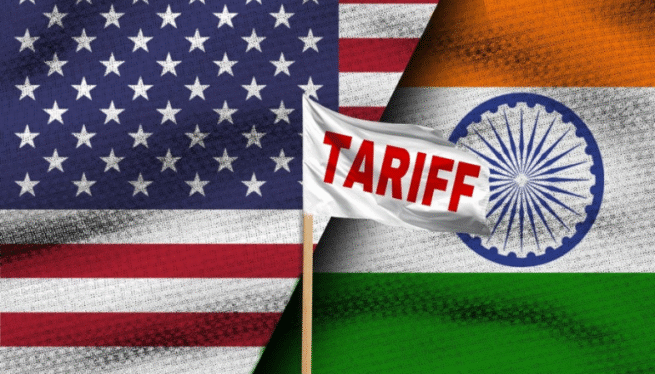
Falling Tariffs & Expanding Horizons: India, US Strike a New Chord

The India-United States economic relationship has often been described as one of considerable promise, constrained by structural hesitation. For decades, the two democracies traded enthusiastically without ever creating a comprehensive framework to anchor that commerce. Now, with negotiations around an India-US Free Trade Agreement (“FTA”) gaining renewed intensity, coupled with the unconventional and transactional approach adopted by the Trump administration, the conversation has shifted from whether such a pact is possible to how transformative it could be.

Continue Reading Falling Tariffs & Expanding Horizons: India, US Strike a New Chord
Listen to this post

Summary: The SEBI, vide its Consultation Paper dated February 5, 2026, has proposed amendments to the existing AIF Regulations related to the winding up of AIF schemes and the surrender of AIF registrations. The proposal seeks to address challenges faced by AIFs that retain liquidated proceeds beyond the permissible fund life due to pending or anticipated litigation, tax contingencies, or residual operational expenses. The key proposals include (i) permitting AIFs to surrender their registration while retaining funds, with such AIF schemes being designated as inoperative funds, subject to rationalised compliance obligations; (ii) permitting retention of funds for anticipated liabilities, subject to the consent of a super-majority of investors; and (iii) permitting retention of funds for operational expenses for up to 3 (three) years. SEBI has invited public comments on the Consultation Paper until February 26, 2026.

Continue Reading SEBI Consultation Paper: Proposed Amendments to AIF Winding-Up and Surrender Framework
Listen to this post
Amendment to Zonal Regulations under Revised Master Plan-2015: Streamlining Setback Requirements and Parking Provisions in Bengaluru

Summary: This Blog discusses the 2025 amendments to the Zonal Regulations of the Revised Master Plan-2015, focusing on recalibrating spatial planning regulations to balance development intensity with urban design considerations. The revised setback formulae offer flexibility for smaller plots, retention of fire safety and percolation standards, demonstrating the government’s commitment to ensuring safety and environmental safeguards within an otherwise liberalised framework.

Continue Reading Amendment to Zonal Regulations under Revised Master Plan-2015: Streamlining Setback Requirements and Parking Provisions in Bengaluru