
CDSCO

Mirror, Mirror on the Wall: The Rise of Personalised Cosmetics Regimens in India

Summary: With artificial intelligence increasingly driving the personalisation of skincare and beauty products in India, businesses operating at this intersection must navigate a complex and evolving regulatory landscape. This post examines the key legal considerations that arise when AI is used to design customised cosmetic regimens. It explores the classification risk where AI-driven analysis and tailored recommendations risk crossing the line from cosmetics into drugs or even software as a medical device. It then considers the interplay between product and service liability under the Consumer Protection Act, 2019, particularly where harm results not from a defective product per se, but from an AI algorithm’s failure to account for individual user characteristics.

Continue Reading Mirror, Mirror on the Wall: The Rise of Personalised Cosmetics Regimens in India
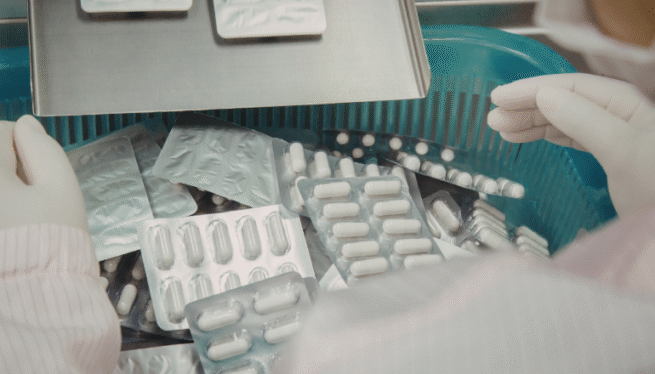
Patchwork of Legal Classification: How Transdermal Patches reveal the fault lines in India’s Drug–Cosmetic Divide

Summary: This article explores the regulatory challenges surrounding acne and transdermal patches in India. An acne patch that promises to “reduce a blemish overnight” and a nicotine patch that delivers a measured dose through the skin look worlds apart. Yet under Indian law, both sit on the same unresolved line. Their classification determines whether a company needs only a cosmetic registration or a full drug license backed by clinical data, with any misclassification carrying serious risks.

Continue Reading Patchwork of Legal Classification: How Transdermal Patches reveal the fault lines in India’s Drug–Cosmetic Divide
From Awareness to Advertising: Re-examining the GLP-1 drug boundaries (Part 1)

Summary: Part 1 of this Article examines the CDSCO’s March 2026 Advisory directed at manufacturers, importers and marketing authorisation holders of GLP-1 receptor agonists, reinforcing that regulatory scrutiny of prescription-only medicine promotion will focus on substance over form. It prohibits all advertising — whether direct, surrogate, or influencer-led — that create brand recall among public.

Continue Reading From Awareness to Advertising: Re-examining the GLP-1 drug boundaries (Part 1)
Medical Device As Software: Has CDSCO Guidance Changed The Rules?

Summary: The CDSCO’s Draft Guidance on Medical Device Software only clarifies how the existing Medical Devices Rules apply to software across its lifecycle, but does not create any new regulatory requirements. Its significance lies in signalling a more structured, risk-based and lifecycle-oriented approach to regulating software-driven healthcare products in India.

Continue Reading Medical Device As Software: Has CDSCO Guidance Changed The Rules?
Navigating Adverse Drug Reactions: Extent of Pharmacovigilance in India

    Introduction

    Pharmacovigilance, as defined by the World Health Organization (WHO), is the science and practice of detecting, assessing, understanding, and preventing adverse effects or any other drug-related problems. Pharmacovigilance in essence aims to enhance patient safety by monitoring and evaluating the risks associated with pharmaceutical products. It is interesting to note that the significance of pharmacovigilance has grown over the years, especially with the increasing global integration of pharmaceutical supply chains and concerns over drug safety. With India being commonly referred to as the ‘pharmacy of the world’ due to it being a global supplier of affordable medicines, ensuring drug safety is critical for public health at large. This blog post outlines the pharmacovigilance system in India, including the existing framework, current challenges, and the future roadmap.

    Continue Reading Navigating Adverse Drug Reactions: Extent of Pharmacovigilance in India

    In Search of a Vaccine for Covid-19 - A Race to The Finish

    The Covid-19 pandemic has wreaked havoc on mankind, infecting well over 13 million, and claiming over half a million lives. It has also severely impacted economies across the world. Our healthcare infrastructure has been pushed to its limits and our frontline healthcare professionals are working to the brink of exhaustion, risking their own lives to save others. We bow to them.

    In the midst of all this, scientists across the world are working feverishly to find a vaccine for this disease. The hopes of billions rest on this. The World Health Organization (“WHO”) has (as of July 15, 2020) declared that there are about 23 potential vaccine candidates that are currently in various stages of clinical trials[1]. Out of these 23 vaccines, vaccines being developed by: (a) Sinovac (inactivated +alum); and (b) University of Oxford / AstraZeneca has entered into the Phase-III of its clinical trials[2]. In addition, as of July 15, 2020, there are around 140 vaccine candidates in preclinical evaluation (trials not commenced).
    Continue Reading In Search of a Vaccine for Covid-19: A Race to The Finish